
Tiny Can, Big Magic: Why Tomato Paste Is My Kitchen
a little remedy for blood pressure and sunscreen

The $3 Can That Does It All
There are many things I keep in my kitchen that make pulling together a meal come together in minutes and still taste deeply delicious. This winter I traveled, and we cooked in many different kitchens, and yes, I schlepped my box of essentials that included spices, good oil, and canned necessities. One of those is the tiny $3 can of tomato paste.
And who knew I was carrying a little remedy for blood pressure and sunscreen all in one little can?
Now, before you go slathering it on your skin…
John Bagnulo recently shared a wonderful piece on lycopene; the powerful antioxidant that gives tomatoes their rich red color, and how tomato paste may help support cardiovascular health, lower blood pressure, and even help reduce the risk of sunburn and sun-related skin damage. Who knew?
Tomato paste is one of the richest food sources of lycopene, and it is also packed with potassium. Together, those nutrients support artery health, blood pressure, and overall heart protection. Even more fascinating: after several weeks, lycopene becomes incorporated into the skin, acting almost like an internal sunscreen — without blocking the sun’s beneficial effects.
This is such a good example of how John and I work together in our classes and retreats. John teaches the science, helping us understand how food and lifestyle shape our health, and then I bring those teachings into the kitchen through practical, delicious everyday cooking.
You can read more of John’s work here: Johns post on tomato paste
Here are twelve simple ways I use tomato paste, plus two dressings that have become staples in my kitchen — one of them borrowed from my mother.
First: How to Store It
Once you open a can of tomato paste, do not store the leftovers in the can. Metal and air are not kind to it — it develops mold quickly, and with it toxins you do not want anywhere near your food.
The best thing I have found: drop tablespoon-sized portions onto a sheet of wax paper, freeze until solid, then transfer to a small bag or container. Label it so it is easy to find in the freezer. Now you always have exactly what you need — no waste, no mold, no hunting around — just pull out a tablespoon and drop it straight into the pan. It thaws in seconds.
This one little habit changes everything about how useful that can becomes.
12 Simple Ways to Use Tomato Paste
1. Stir it into scrambled eggs. Just a teaspoon adds umami depth and a gorgeous golden-orange hue. Add a pinch of smoked paprika and you have something special.
2. Build the base of any quick pasta sauce. Bloom a spoonful in olive oil with garlic before adding anything else. This one step transforms a jar sauce or a simple pantry sauce entirely.
3. Spread it on toast like a savory jam. Top with good olive oil, flaky salt, and fresh herbs. Think bruschetta, simplified.
4. Deepen a soup in seconds. Whether it is lentil, white bean, or vegetable, a tablespoon stirred in early adds body and richness that tastes like it simmered all day.
5. Make a five-minute shakshuka. Tomato paste, a can of whole tomatoes, spices, and eggs poached right in the pan. Weeknight dinner, done.
6. Rub it on chicken or fish before roasting. Mix with olive oil, garlic, and your spices of choice. It caramelizes in the oven into something deeply savory and slightly sweet.
7. Stir it into hummus. A swirl of tomato paste through store-bought or homemade hummus makes it feel entirely new. Drizzle with oil and serve with warm bread.
8. Build a better grain bowl. Toss warm farro, rice, or lentils with a spoonful of tomato paste, olive oil, and lemon. Instant flavor without a sauce.
9. Use it in a braise. Whether you are braising lamb, lentils, or chickpeas, tomato paste added early and cooked down is what gives braises that deep, resonant flavor.
10. Make a quick pan sauce. After searing meat or vegetables, deglaze with a little tomato paste, stock, and herbs. Two minutes and you have a sauce worth mopping up.
11. Whisk it into salad dressing. A tiny bit emulsifies beautifully with olive oil and vinegar and adds an earthy, savory note that makes greens feel like a real meal. (See my recipes below)
12. Stir it into yogurt as a savory dip. Mix with garlic, olive oil, and cumin for an instant dip or sauce for roasted vegetables, flatbread, or grilled meats.
Tomato paste is a thick, highly concentrated purée made by slow-cooking tomatoes for several hours, then straining out the seeds and skins. The result is a deeply savory, acidic, brick-red paste that functions as a culinary secret weapon, building umami flavor, natural thickness, and vibrant color in soups, rice, stews, braises, and sauces.
Umami & Sweetness The long reduction process concentrates the tomatoes’ natural sugars and umami-rich glutamates. The payoff is a savory depth that enriches dishes without making them taste aggressively “tomatoey.”
The Toast Method For maximum flavor, cook tomato paste in fat — olive oil or butter — for one to two minutes before adding any liquid. The paste will shift from bright red to a deeper brick color as it caramelizes, unlocking aromatic complexity and eliminating any tinny or raw edge.


And not all tomato paste is created equally—look for quality. I look for Bionaturae. 100% of the tomatoes used by BioNaturae are exclusively grown in Italy and picked at the peak of ripeness.
Exclusively Italian Sourced: Every single tomato variety used for their paste, strained, crushed, diced, and whole peeled products is grown on small family farms across Italy, particularly in areas like Tuscany. Then processed and packed in to jars.
Vine-Ripened: The tomatoes are left on the vine to ripen naturally under the Italian sunshine. This natural process allows them to develop their characteristic high sweetness and deep flavor, eliminating any need for the company to mask the taste with added sugars or salt. Then processed and packed in to jars.
Most recipes call for just a tablespoon or two, which leaves most of a can unused. Here’s how to avoid waste:
Two Dressings: Hers and Mine
One of my earliest kitchen memories is watching my mother make salad dressing. She had an hourglass-shaped jar with a plastic lid and she would open a packet of Italian seasoning, pour it in, then add her red wine vinegar, oil, and a good shake. That jar lived on the refrigerator door and it meant dinner was almost ready.
She also loved making her own French dressing — the real kind, tangy and a little sweet, deeply red. I inherited that love completely. But somewhere along the way I made it my own, pulling in my obsession with tomato paste and fresh basil. So here are two dressings: hers and mine.
Both start with that little can.
Creamy Tomato Basil Vinaigrette
In a small bowl whisk together 1 tablespoon tomato paste, 2 tablespoons apple cider vinegar, ½ teaspoon dried basil (or a handful of fresh torn leaves), ¼ teaspoon garlic powder, ¼ teaspoon honey, and salt and pepper to taste. Once smooth, slowly drizzle in ⅓ cup olive oil, whisking continuously until the dressing comes together and emulsifies. Taste and adjust. It should be bright, a little tangy, and deeply savory.
My Mother’s French Dressing
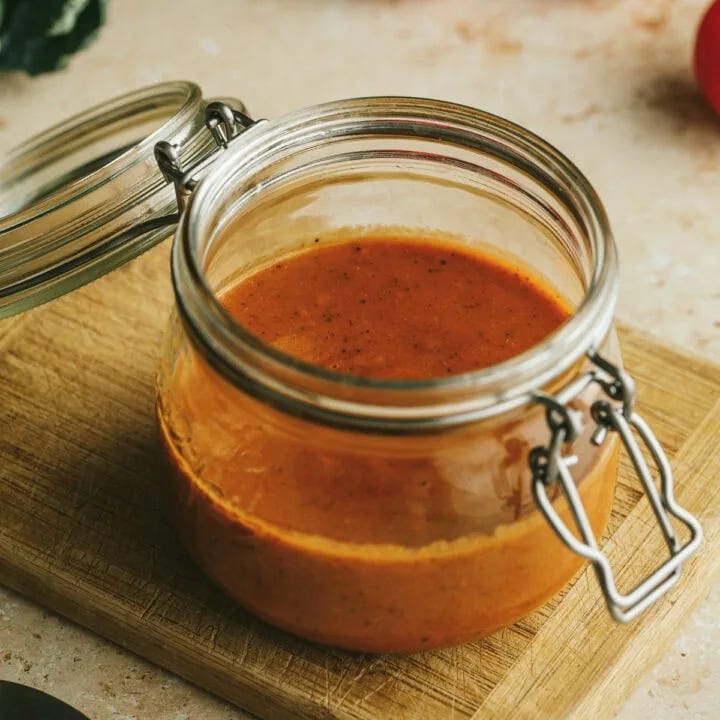
Into a jar or bowl add 2 tablespoons tomato paste, 2 tablespoons apple cider vinegar, 2 tablespoons maple syrup, 1 tablespoon Dijon mustard, 1 clove of garlic minced, ¼ teaspoon smoked paprika, and salt and pepper to taste. Whisk everything together until smooth, then slowly drizzle in ⅓ cup olive oil, whisking the whole time until you have a glossy, emulsified dressing. It should be tangy and a little sweet with a beautiful deep red color. Just like hers.
Both dressings keep beautifully in the refrigerator for up to a week and are even better on day two — the flavors settle in and deepen overnight. Shake well before serving.
And just in case you missed it, this is how John Bagnulo and I teach: he teaches the science and I teach the execution in the kitchen. We make a great team, and I hope you will join us for one of our classes this year!


Upcoming classes with John and Jan